Neural correlates of phosphene perception in blind individuals: A step toward a bidirectional cortical visual prosthesis (opens in a new tab)
Science Advances, 11(45): eadv8846. doi:10.1126/sciadv.adv8846

Applications
Ripple technology is a staple in my lab. It’s great to have a single piece of equipment that can do it all: stimulation, recording, invasive, noninvasive. I’m not aware of any other device that can stream 512 channels at 30 kHz wirelessly in a portable form factor, while also being able to stimulate simultaneously. Ripple technology is leading the field, and they’ve been a great collaborator helping us develop custom solutions to push boundaries even further.
 Jacob George University of Utah · Rehabilitation Robotics
Decode neural activity and stimulate in the same experiment, in the lab and on the move.
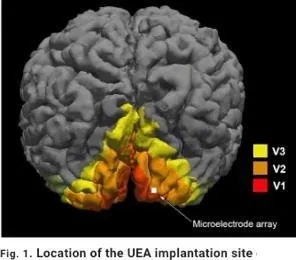
Fernandez lab, Universidad Miguel Hernández
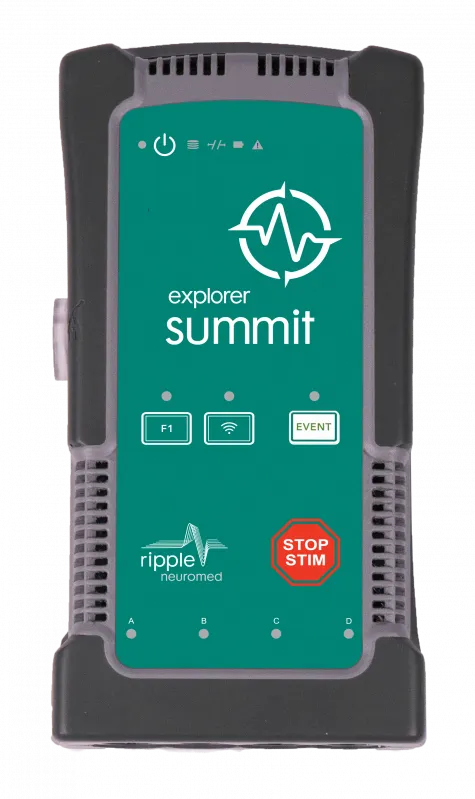
Microstimulation through a Utah array implanted in the visual cortex evokes phosphenes in blind volunteers, a step toward a bidirectional cortical visual prosthesis. The Summit handles both recording and stimulation.
Science Advances, 11(45): eadv8846. doi:10.1126/sciadv.adv8846
Hardware configuration
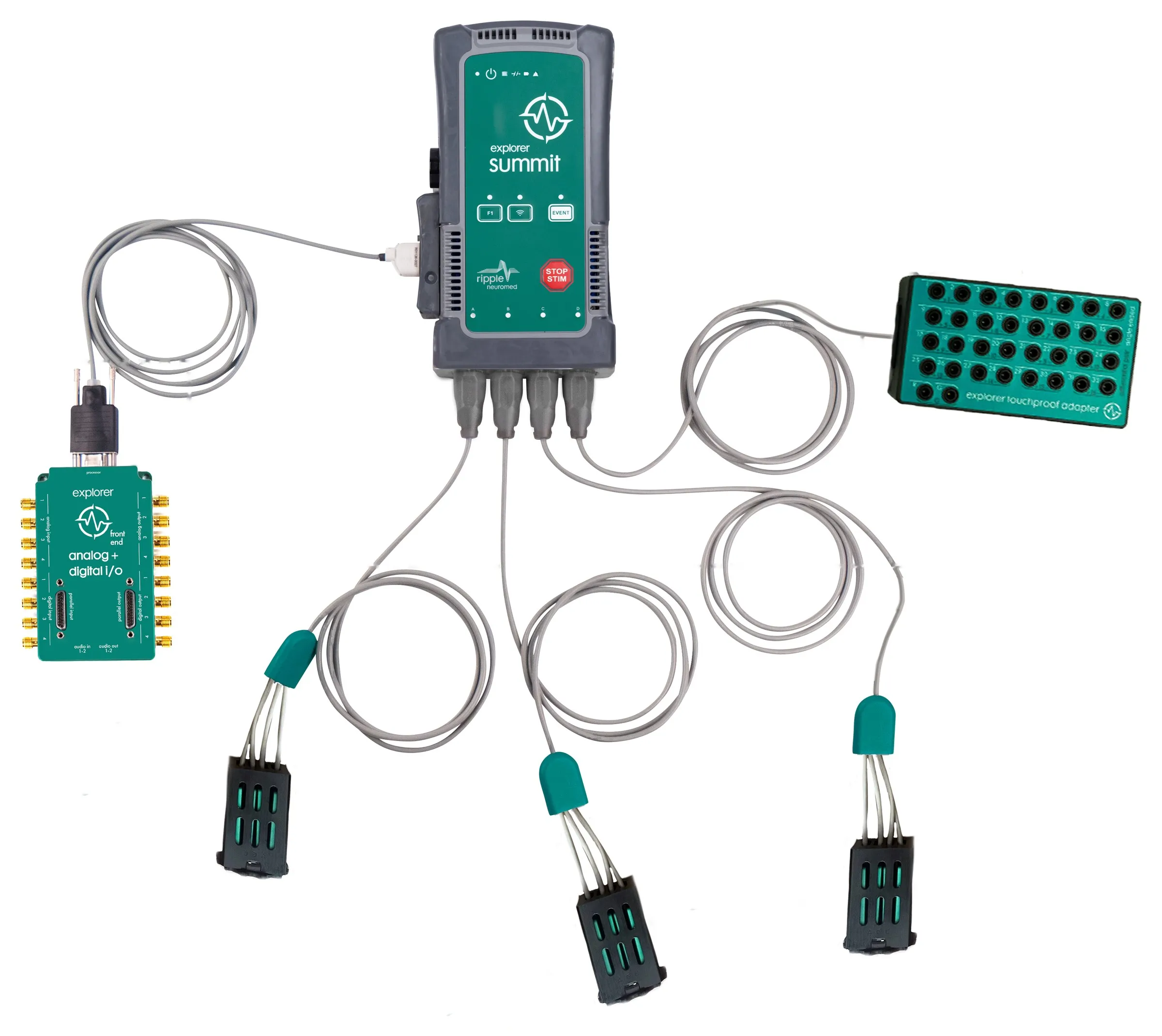
Ripple products are an indispensable tool in our neurophysiology research. We are very satisfied with the platform’s ability to obtain high-quality neural recordings from up to 512 simultaneous channels, as well as its robust functionality for delivering a wide range of customized stimulation patterns. Moreover, the seamless integration and speed of the system make true closed-loop stimulation possible, enabling real-time, adaptive experiments.
 Eduardo Fernandez Universidad Miguel Hernández · Visual Prosthetics
Restore movement and sensation for people with limb loss or paralysis.
Fisher lab, University of Pittsburgh
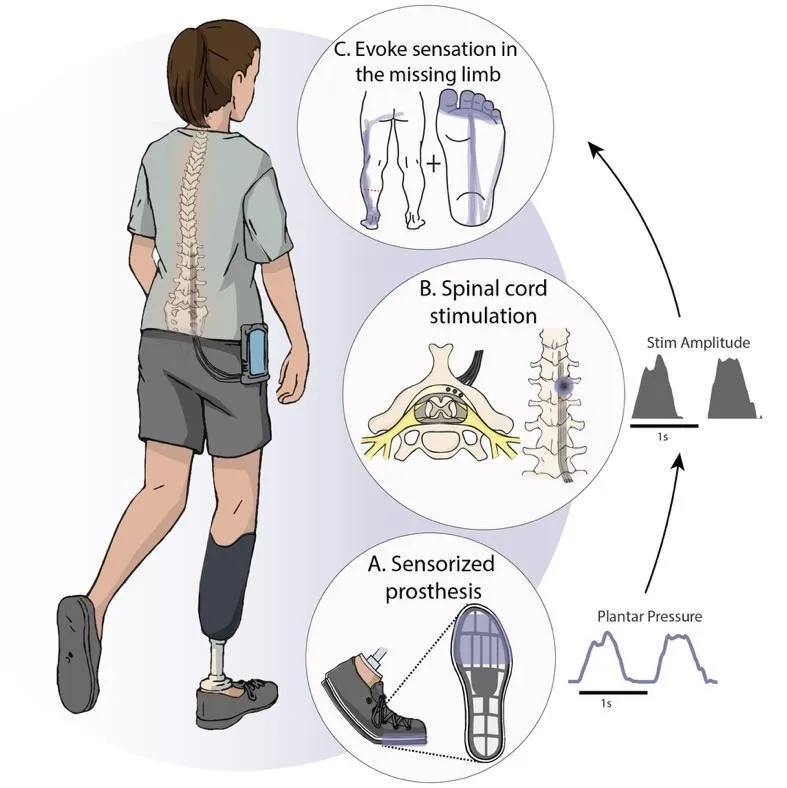
Closed-loop spinal cord stimulation, driven by a pressure-sensing insole, restores sensation from the missing foot in people with lower-limb amputation.
Nature Biomedical Engineering, 8(8): 992–1003. doi:10.1038/s41551-023-01153-8
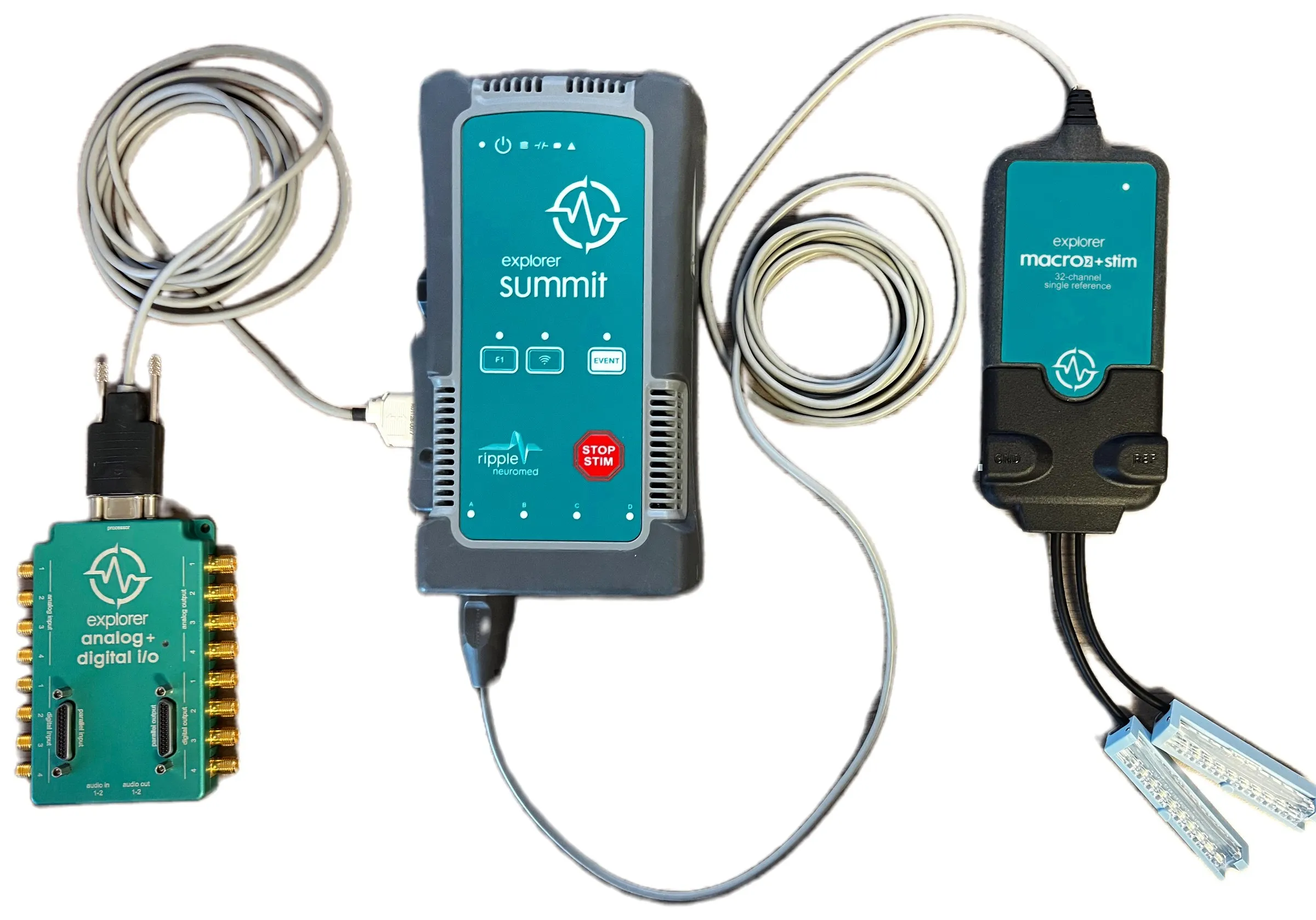
Hardware configuration
IEEE Transactions on Neural Systems and Rehabilitation Engineering, 33: 3246. doi:10.1109/TNSRE.2025.3599062
Journal of Neural Engineering, 21(6): 066020. doi:10.1088/1741-2552/ad94a7
Our team can help you configure the right Explorer Summit system for your research.